
Forbes 2026 Interest Rate Forecast, Who Determines the Fed's Path?


Original Article Title: What To Expect For Interest Rates In 2026
Original Article Author: Simon Moore, Forbes
Translation: Peggy, BlockBeats
Editor's Note: With the market betting that 2026 will see a "new Fed chair + a new round of rate cuts" scenario, the U.S. interest rate path has once again become the key variable for global asset pricing.
CME futures indicate that the federal funds rate may fall to around 3% in 2026, below the current 3.75%–4% range, with the major cuts likely concentrated in the first half of the year. However, against a backdrop where inflation has not fully returned to target and signs of weakening employment have emerged, the policy outlook remains uncertain. Although the Trump administration is expected to appoint a more dovish new chair, the FOMC's operational mechanism means that the policy stance will still be driven by economic data.
This article outlines the key interest rate meeting schedule, rate cut expectations, and policy dynamics for 2026, providing readers with a clear framework for understanding the direction of U.S. interest rates.
The following is the original text:
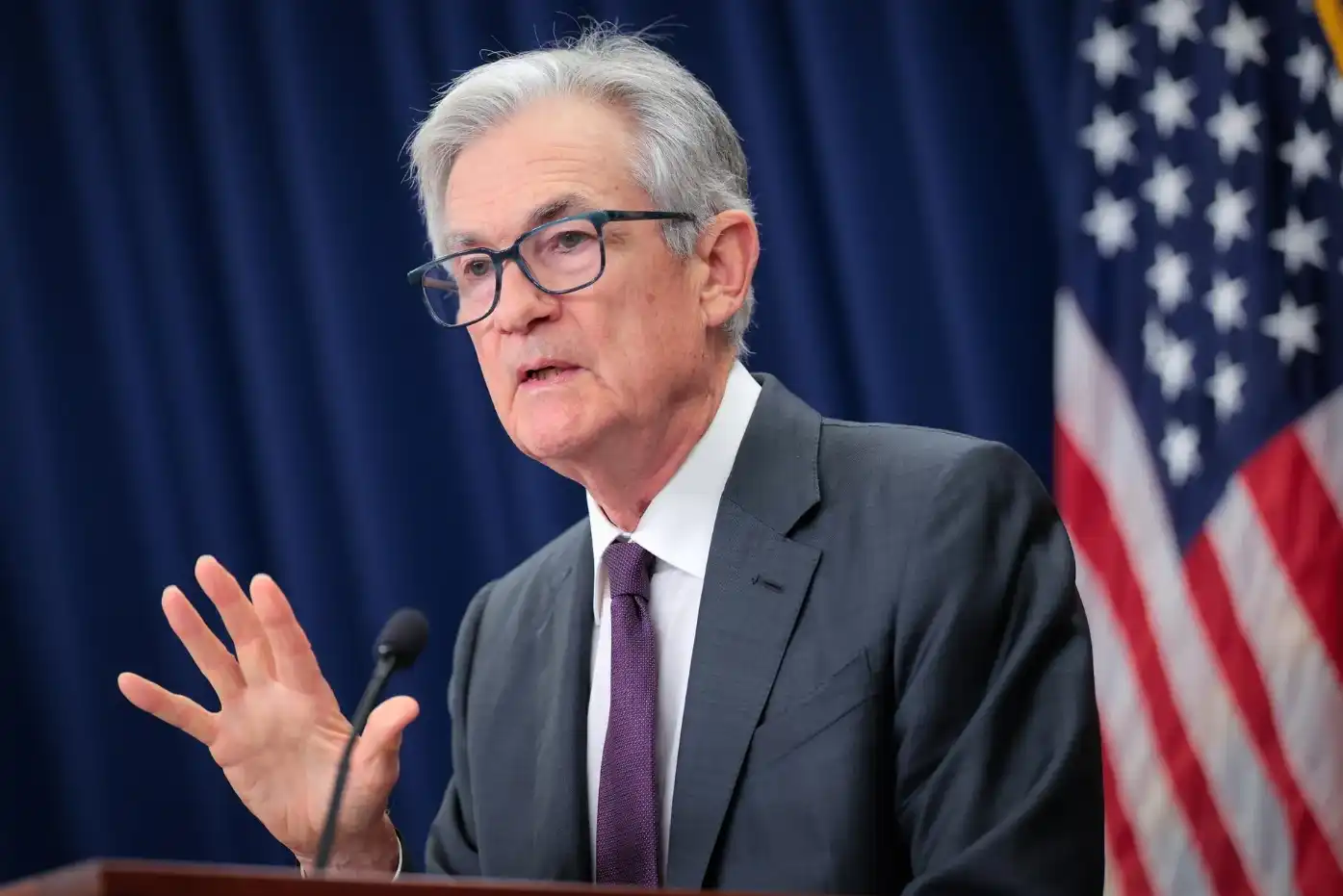
After the routine Federal Open Market Committee (FOMC) meeting in Washington, Fed Chair Jerome Powell answered questions at a press conference. Despite President Donald Trump's pressure for a rate cut, the U.S. central bank kept the federal funds rate unchanged in the 4.25%–4.5% range.
Based on pricing of rate futures by the CMEFedWatch tool, the market broadly expects that in 2026, under the backdrop of a "new Fed chair," there will be a short-term rate cut cycle, with the FOMC's eight meetings throughout the year likely focusing on the rate cut path.
Before that, the FOMC will still hold its final interest rate meeting of the year on December 10, 2025. The market believes that there is a possibility of a small rate cut at this meeting, but the probability of maintaining the rate is also not negligible.
2026 Interest Rate Path
Based on current pricing, by December 2026, the federal funds rate is expected to decrease to around 3%, below the current range of 3.75%–4%.
However, the interest rate outlook still carries significant uncertainty: in more extreme market estimates, rates could drop as low as 2% or continue to hold at the 4% level.
If the FOMC ultimately initiates a rate cut, the market believes the key rate cut may be concentrated in the first half of 2026. In contrast, Fed officials themselves are more cautious about their 2026 rate level forecasts, with most forecasts still expecting rates to remain above 3%. However, these forecasts were released in September and will be updated again in December.
2026 FOMC Meeting Schedule
Although the Fed can adjust rates at any time in an economic emergency, in normal years, it typically follows the established schedule of eight meetings.
The 2026 rate-setting meetings will be held on the following dates: January 28, March 18, April 28, June 17, July 29, September 16, October 28, and December 9.
Starting in March, the FOMC will update its Summary of Economic Projections (SEP) at alternate meetings.
New Chairmanship Could Drive Lower Rates
President Trump is expected to nominate a new Fed chair in 2026 who is more supportive of a "cutting" orientation. Prediction markets (such as Kalshi) currently view Kevin Hassett as the most likely candidate.
This suggests that the 2026 rate policy may be further influenced. For example, Stephen Miran, appointed by Trump in 2025, has consistently leaned towards a more aggressive rate-cutting stance in votes.
However, apart from the chairman's selection, the overall voting structure of the FOMC will continue in the existing pattern, meaning that monetary policy will not undergo a drastic shift due to a new chairman.
Economic Data Remains a Key Variable
Ultimately, the Fed's decisions will still be driven by economic data.
Currently, inflation is slightly above the 2% target but shows no signs of spiraling out of control; the unemployment rate has ticked up, but not to an alarming level.
In this environment, the FOMC is likely to gradually reduce rates. If the unemployment rate deteriorates significantly, the rate cut may be forced to increase; conversely, if inflation unexpectedly rebounds, the Fed may slow the pace of adjustments. However, the latter scenario currently has a low probability of occurring.
The most closely watched indicator at present is employment data. Some officials believe the labor market is slowing, which could drag down the overall economy, necessitating an early rate cut; while others believe that softening employment does not pose a real risk.
The employment data will continue to reveal in 2026 which side's judgment was closer to reality.
You may also like
Former ByteDance employee's account: How I started with two Pinduoduo hard drives and made six times the profit with Seagate to achieve financial freedom?
MiCA reshuffle begins, Binance temporarily bids farewell to the EU
How does Gate redo "buying and selling stocks" from the cryptocurrency world to the stock market?
Visa and Mastercard join 140 giants to launch a new stablecoin, but the impact on the market landscape may still be limited
Circle CEO responds to OUSD's challenge: Stablecoins are a winner-takes-all business, and we will not slow down
Argentina vs Cape Verde: When a Record-Breaking Legend Meets an Unbreakable Underdog
WEEX exclusive pre-match analysis of Argentina vs Cape Verde, exploring Messi-led Argentina’s dominance and Cape Verde’s historic defensive breakout, with a breakdown of volatility, structure, and match dynamics.
WEEX Launches Depth Chart for Spot Trading
Raising interest rates to protect STRC and selling coins to maintain credit, this time the strategy has chosen the two most expensive paths
Morning Report | Samsung announces a 265.5 trillion won investment plan, focusing on semiconductor and AI computing power data centers; Vitalik publishes an article detailing the entire technology tree behind the confusion protocol (iO) mainline
In the era of AI, what is left of Bitcoin?
NeoSoul announced plans to integrate with the OKX Agentic Wallet, promoting AI agents' participation in the on-chain economy
Why Is Bitcoin Lagging Stocks in 2026? AI Stocks, ETF Outflows, and the Nasdaq Rally Explained
What you bought on CEX is really not US stocks: Analyzing the 94% liquidation monopoly and the evaporation of equity under a five-layer pipeline
In such a crowded cross-border payment arena, where is the next stop for the future?
Why Is Bitcoin Down in 2026? What We Can Learn From 2022
The large models in the United States are moving towards closure in the name of security
From the white-haired stock god to the billionaire fund mogul, the smart people shorting Nvidia are all getting rich using the same framework
Morning Report | CoinEx becomes a key hub for Iran to evade sanctions, involving over $3.8 billion in funds; Kalshi seeks a new round of financing, with a valuation potentially rising to $40 billion
Former ByteDance employee's account: How I started with two Pinduoduo hard drives and made six times the profit with Seagate to achieve financial freedom?
MiCA reshuffle begins, Binance temporarily bids farewell to the EU
How does Gate redo "buying and selling stocks" from the cryptocurrency world to the stock market?
Visa and Mastercard join 140 giants to launch a new stablecoin, but the impact on the market landscape may still be limited
Circle CEO responds to OUSD's challenge: Stablecoins are a winner-takes-all business, and we will not slow down
Argentina vs Cape Verde: When a Record-Breaking Legend Meets an Unbreakable Underdog
WEEX exclusive pre-match analysis of Argentina vs Cape Verde, exploring Messi-led Argentina’s dominance and Cape Verde’s historic defensive breakout, with a breakdown of volatility, structure, and match dynamics.


